The science
Measured. Not guessed.
Kairo runs on hardware proven at scale and algorithms tuned and validated for our own members. That split matters: we are not claiming to have invented a sensor, and we are not going to publish an accuracy percentage before the study that produced it is finished.
What follows is what we measure, how a raw signal becomes a score you can act on, and exactly where the boundaries of a wellness product sit.
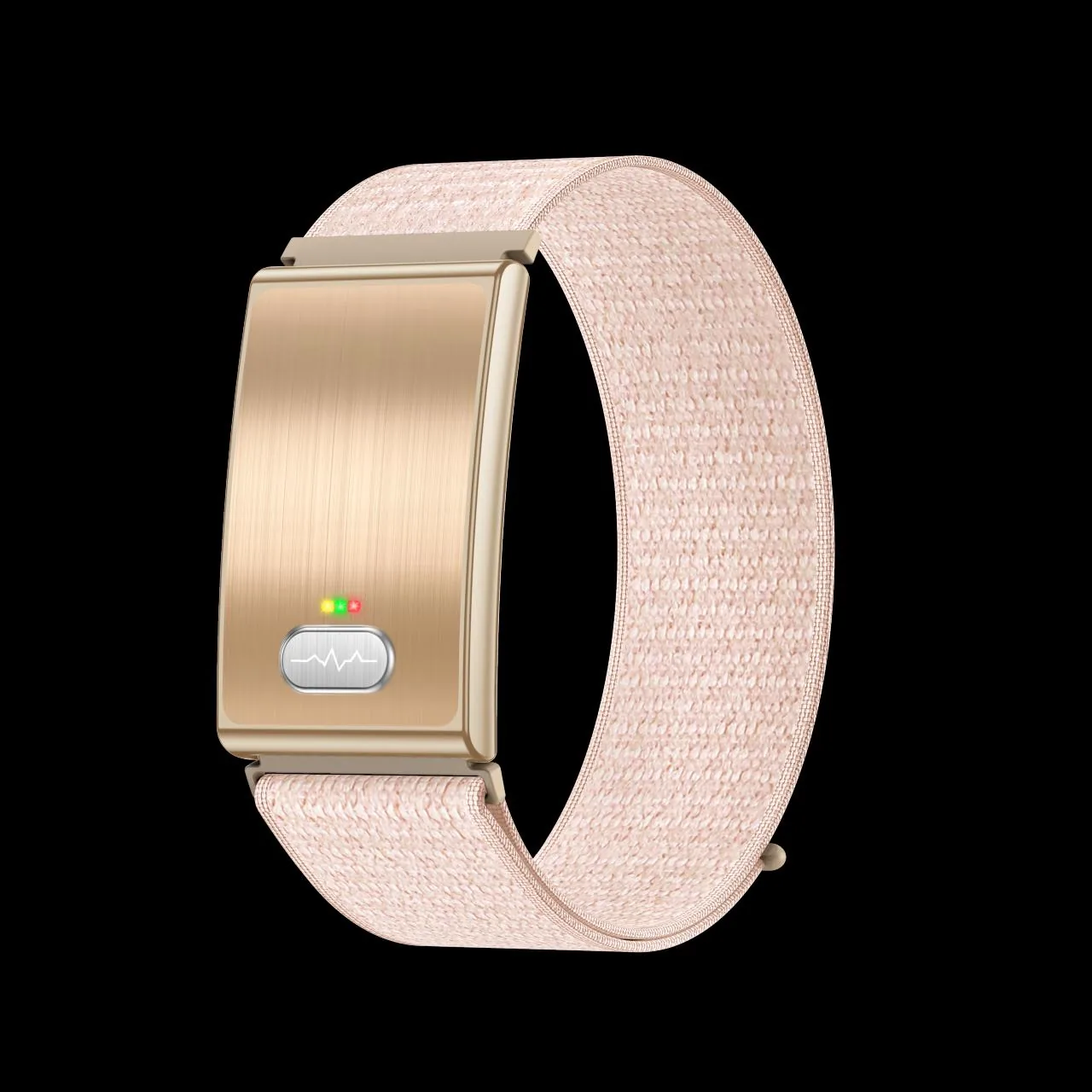
What is inside
The sensor stack
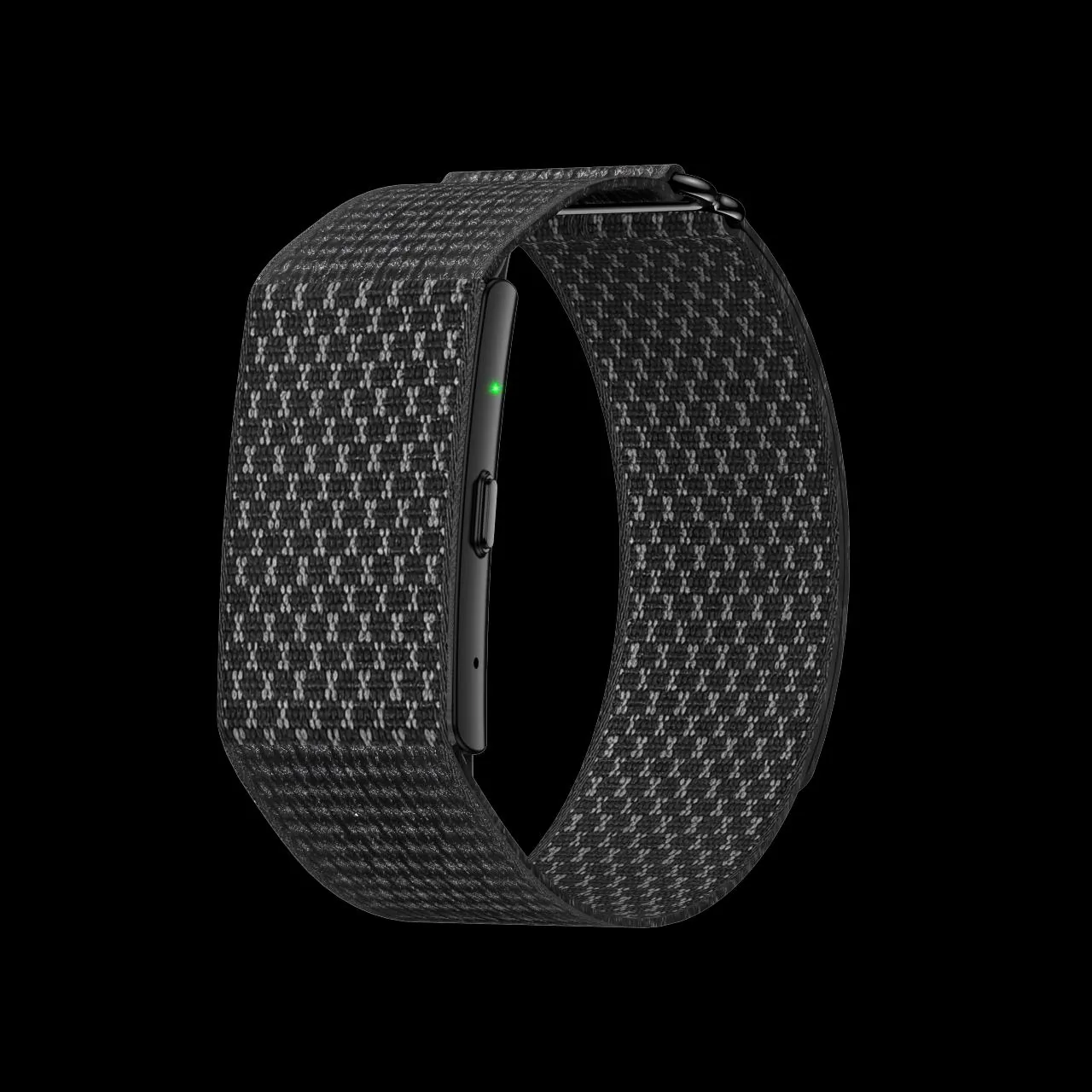
- Optical heart sensor
- Green and infrared light measure blood-volume changes at the wrist — heart rate continuously, heart-rate variability while you are still, and the pulse-wave signal behind blood-pressure and blood-oxygen trends.
- 3-axis accelerometer
- Movement and position, sampled continuously. It separates a restless night from a still one, and tells the heart sensor when a reading should be thrown away.
- Skin temperature
- Overnight deviation from your own baseline — one of the earliest signals that something has changed, from a hard block of training to the start of an illness.
- SpO₂
- Blood-oxygen estimation during sleep.
The pipeline
From signal to score
Three steps, in lay terms. The interesting work is in the middle one.
- 01
Capture
The band samples continuously and stores several days locally, so a phone left at home costs you nothing. Raw signal never leaves the device unencrypted.
- 02
Clean
Movement artefacts are rejected rather than smoothed. A reading taken while you rolled over is discarded — a confident number built on bad signal is a lie told beautifully.
- 03
Coach
Clean signal is compared to your own baseline — never a population average — and turned into three scores and one short instruction for the day.
The three scores
What each number means
Readiness
How prepared your body is today, from sleep, resting heart rate and heart-rate variability.
Readiness is the number you check before you decide how hard to go. It learns your own baseline over the first fortnight, then tells you when your body has absorbed the work — and when it hasn't.
- High readiness · 67–100
- Moderate readiness · 34–66
- Low readiness · 0–33
Load
How hard your day worked your body — all movement counts, not just workouts.
Load counts the walk to the taxi rank and the third set of stairs, not only the session you logged. Compared against your own 14-day norm, it shows when an ordinary week is quietly a heavy one.
Sleep
How much of the sleep your body needed you actually got.
Not just hours in bed. Kairo works out what your body needed after the day it had, then shows you how close you came — and what to change tonight.
Validation
How we check ourselves
Heart rate is compared against a chest strap across a protocol that covers rest, steady effort and intervals — the last of these being where wrist optical sensing is hardest and where most consumer claims quietly stop.
Sleep staging is being assessed in a supervised sleep-lab pilot against polysomnography, the reference standard. Agreement on staging is imperfect for every wrist device on the market, ours included, and we will report the number we get rather than the number we would like.
Blood-pressure trends are compared against a calibrated upper-arm cuff — across times of day, postures and a spread of baseline pressures, because a reading that only works on a rested 25-year-old is not a reading.
Results will be published as they complete. Until then we quote no accuracy figures — not on this page, not in an advertisement, not in a support conversation.
Who checks the work
Advisors
Named people with credentials you can verify.
Tafadzwa Moyo
Head of Coaching Science
MSc Exercise Physiology
Lerato Dlamini
Sleep Lead
PhD candidate, Sleep and Circadian Science
Dr Rufaro Chikore
Medical Advisor
MBChB